
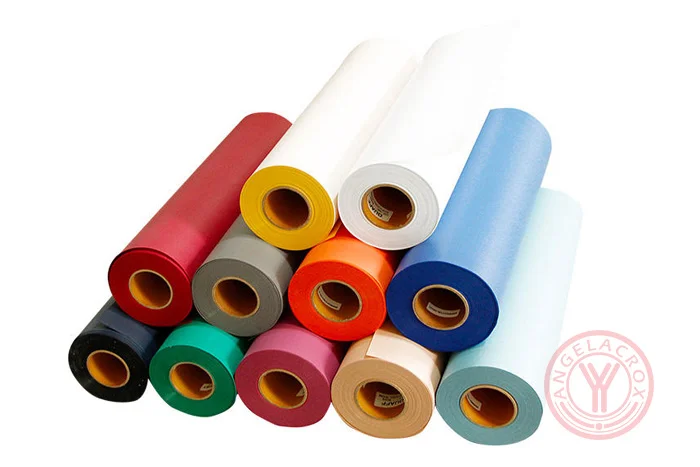
PU Heat Transfer Vinyl Meaning
PU stands for Polyurethane, referring to the polymer base that makes up this type of vinyl. Unlike PVC-based heat transfer materials, PU heat transfer vinyl is made from a polyurethane film that is coated with a heat-activated adhesive on one side and a carrier sheet (usually a transparent or matte plastic liner) on the other. When heat and pressure are applied — typically using a heat press machine or a household iron — the adhesive melts and bonds the vinyl permanently to the fabric.The result is a smooth, professional-looking design that is durable, flexible, and wash-resistant.Key Characteristics
1. Softness and Flexibility
One of the defining features of PU HTV is its soft, smooth feel after application. Unlike some other vinyl types, it conforms naturally to the fabric and stretches with it, making it ideal for activewear and fitted garments.
2. Thin Profile
PU vinyl is notably thinner and lighter than PVC-based alternatives. This gives applied designs a more natural, low-profile look and feel — wearers often can barely notice the vinyl is there.
3. Vibrant Colors
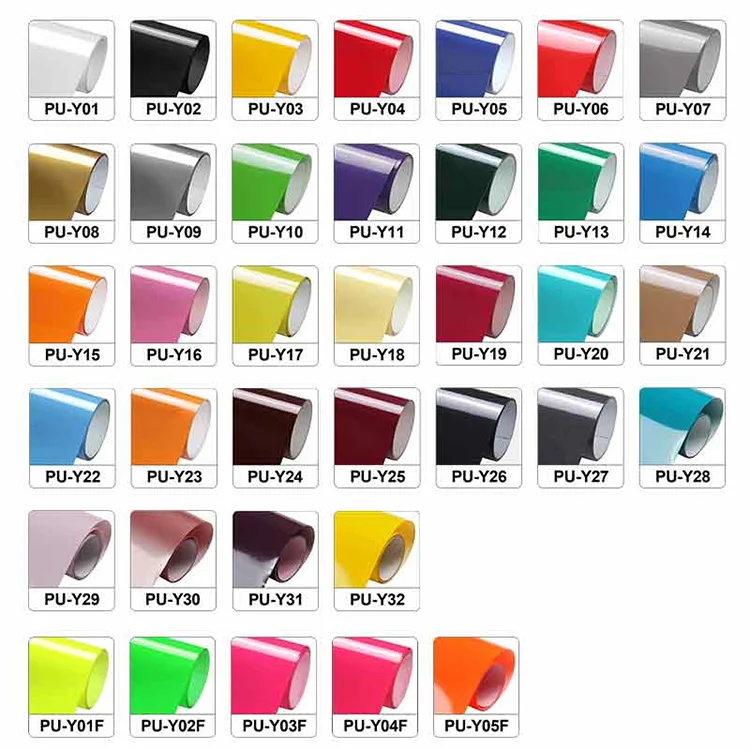
PU HTV is available in an extensive range of colors, finishes, and effects — including matte, glossy, glitter, metallic, neon, holographic, brushed metal, and more — making it highly versatile for creative design work.
4. Durability
When applied correctly, PU HTV can withstand dozens to hundreds of wash cycles without cracking, peeling, or fading significantly. It bonds strongly to cotton, polyester, cotton-polyester blends, and many other fabrics.
5. Eco-Friendliness
Because it is PVC-free, PU HTV is generally considered a more environmentally friendly option. It does not contain harmful plasticizers such as phthalates, which are commonly found in cheaper PVC HTV vinyl products.
Types of Polyurethane Heat Transfer Vinyl
Polyurethane Heat Transfer Vinyl comes in multiple variants depending on effect and application:Common Finishes & Textures
- Standard / Matte PU: The most widely used vinyl. It has a smooth, non-shiny surface and provides an ultra-soft feel, often used for everyday cotton and polyester apparel.
- 3D Puff PU: A specialized vinyl that expands and raises off the fabric when heated, creating a distinct 3D, tactile design commonly used for sportswear and caps.
- Flock / Suede PU: Features a fuzzy, textured, or suede-like feel that gives a premium, vintage, or elevated look to logos and designs.
- Metallic & Holographic PU: Offers a vibrant, eye-catching, shiny surface that reflects light or shifts in color as the garment moves.
- Glitter PU: Embedded with sparkles, providing a decorative effect without the stiffness or heavy feel of traditional PVC glitter.
Performance & Specialty Types
- Stretch PU: Specifically formulated with high elasticity, making it ideal for activewear, spandex, and performance fabrics so the design moves and rebounds without cracking.
- Printable PU: Designed for eco-solvent or solvent inkjet printers. It allows you to print full-color graphics and photos directly onto the PU vinyl before pressing it onto the garment.
- Reflective PU: Highly visible under direct light, primarily used for safety gear, construction apparel, and nighttime running clothes.
- Glow-in-the-Dark PU: Absorbs natural or artificial light and emits a vibrant glow in dark settings, ideal for novelty or Halloween apparel.
How to Use PU Heat Transfer Vinyl
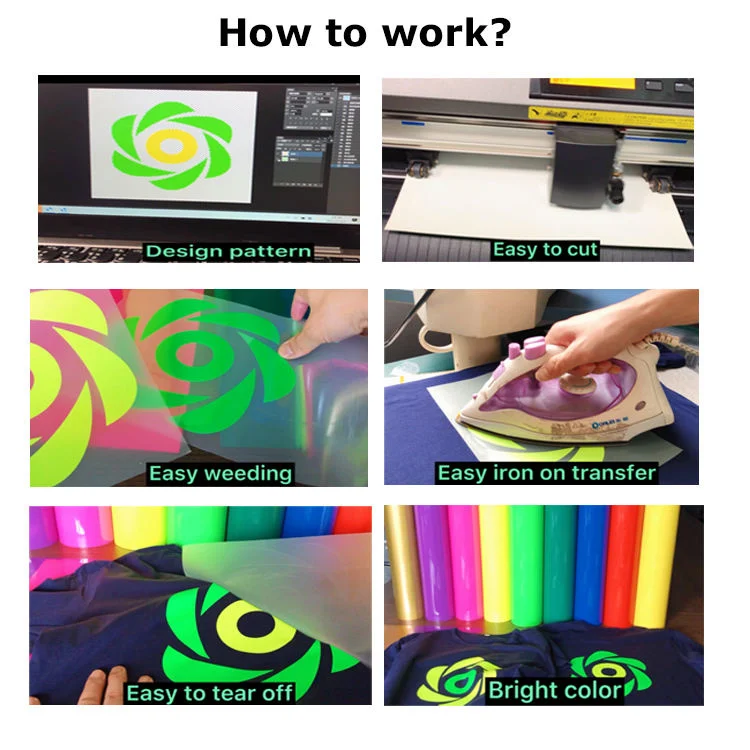
The typical process for using PU heat transfer vinyl involves several steps:
- Design Creation — A design is created digitally using software such as Adobe Illustrator, CorelDRAW, or dedicated cutting software.
- Cutting — The vinyl sheet is loaded into a vinyl cutter (such as a Cricut or Silhouette machine), which cuts the design out of the vinyl layer while leaving the carrier sheet intact.
- Weeding — The excess vinyl surrounding the design is removed by hand, leaving only the desired graphic on the carrier sheet.
- Application — The weeded design is placed face-down onto the fabric, and heat and pressure are applied using a heat press (typically at 140–145°C (284–293°F) for 8–10 seconds).
- Peeling — After the vinyl cools (or immediately, depending on the product type — "cold peel" vs. "warm peel"), the carrier sheet is removed, leaving the finished design on the garment.
Applications of PU Heat Transfer Vinyl
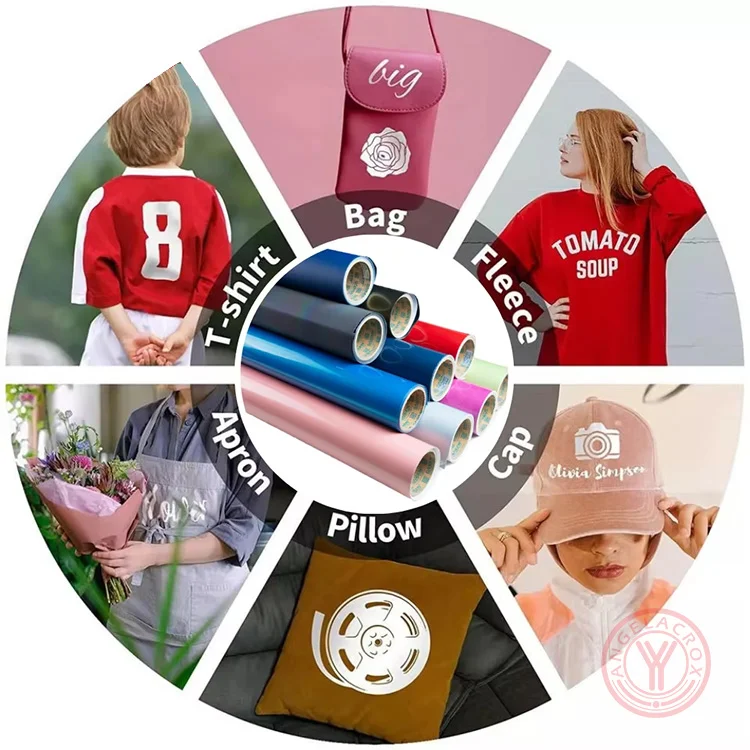
Polyurethane (PU) heat transfer vinyl (HTV) is a thin, stretchy, and lightweight material ideal for custom garment decoration. It is widely used to create personalized apparel, team uniforms, branded merchandise, and accessories like canvas bags.- Custom T-shirts and sportswear — team uniforms, jerseys, gym wear
- Promotional merchandise — branded bags, caps, and accessories
- Small business apparel printing — on-demand custom clothing
- DIY and craft projects — personalized gifts, home decor items
- School and club uniforms — name labels, numbers, and logos
Is PU Heat Transfer Vinyl Better Than PVC HTV?
PU (polyurethane) is generally considered better than PVC (polyvinyl chloride) for almost all garment applications. It is thinner, softer, stretches with the fabric without cracking, and feels like part of the clothing. PVC is cheaper and more rigid, making it better suited for hard surfaces or outdoor signage.
Comparison Table
| Comparison Factor | PU Heat Transfer Vinyl (PU HTV) | PVC Heat Transfer Vinyl (PVC HTV) |
|---|---|---|
| Material | Polyurethane (PU) | Polyvinyl Chloride (PVC) |
| Hand Feel | Soft, lightweight, fabric-friendly | Thicker, stiffer, plastic-like |
| Comfort | High, suitable for direct skin contact | Moderate, slightly heavy feel |
| Elasticity | High stretch, follows fabric movement | Low stretch, may crack under tension |
| Design Detail | Excellent for fine details and small text | Better for simple and bold designs |
| Cutting & Weeding | Easy cutting and weeding | More difficult for small details |
| Wash Durability | Excellent (approx. 40–60+ washes) | Good, but may crack over time |
| Crack Resistance | Highly resistant to cracking | Prone to cracking after repeated use |
| Eco-Friendliness | More eco-friendly, often PVC-free | Less eco-friendly (contains PVC) |
| Odor | Low odor or odorless | May have slight plastic smell |
| Cost | Higher cost | Lower cost |
| Fabric Compatibility | Cotton, polyester, blends, stretch fabrics | Cotton, thicker fabrics, basic applications |
| Applications | Fashion brands, sportswear, premium apparel | Promotional clothing, budget printing |
| Overall Rating | ⭐⭐⭐⭐⭐ (Premium choice) | ⭐⭐⭐ (Budget option) |
How do You Know if Heat Transfer Vinyl is PU
To determine if your Heat Transfer Vinyl (HTV) is polyurethane (PU), test the material’s flexibility and thickness. PU is remarkably soft, thin, and highly stretchable, while its cheaper alternative, PVC, feels stiff and plasticky. You can confirm PU by evaluating its feel, stretch, and appearance.
The easiest and most accurate method is:
-
Look for terms like:
- PU HTV
- Polyurethane Heat Transfer Vinyl
- PVC-free HTV
-
Check supplier specifications:
- Material: PU / TPU / PVC
- Thickness: usually very thin (PU is thinner than PVC)
- Stretch rate: PU usually has high elasticity
? If it clearly says “PU” or “Polyurethane,” it is PU vinyl.
Key Identification Traits
- The "Hand" Feel: PU is very soft and smooth to the touch, often feeling like synthetic leather. It drapes easily and feels lightweight on clothing. If it feels thick, rigid, or like a harsh plastic, it is likely PVC.
- The Stretch Test: PU stretches significantly and bounces back to its original shape. If you gently pull it, it will stretch without warping. PVC has very little to no elasticity and might even wrinkle or crack when flexed.
- The Peel Method: Unpack the material to inspect it. HTV generally features a shiny or semi-matte plastic carrier sheet on the front. PU films will peel easily after heat pressing, often as a "hot peel," while PVC typically requires a "cold peel" and is visibly thicker.
PU Heat Transfer Vinyl HS Code
The standard and most universally applied HS Code for Polyurethane (PU) heat transfer vinyl (HTV) is 3920.99.00 (or 3920999090), which classifies "other plates, sheets, film, foil and strip, of plastics, not self-adhesive."
YanYan is a Heat Transfer Vinyl manufacturer with over 20 years of experience, providing high-quality PU Heat Transfer Vinyl for apparel decoration and customization. If you are looking for reliable materials with consistent quality and professional support, please visit our product page to explore available colors and specifications, or contact us directly to get a quick quote, request free samples, and discuss OEM/ODM customization solutions for your business.