
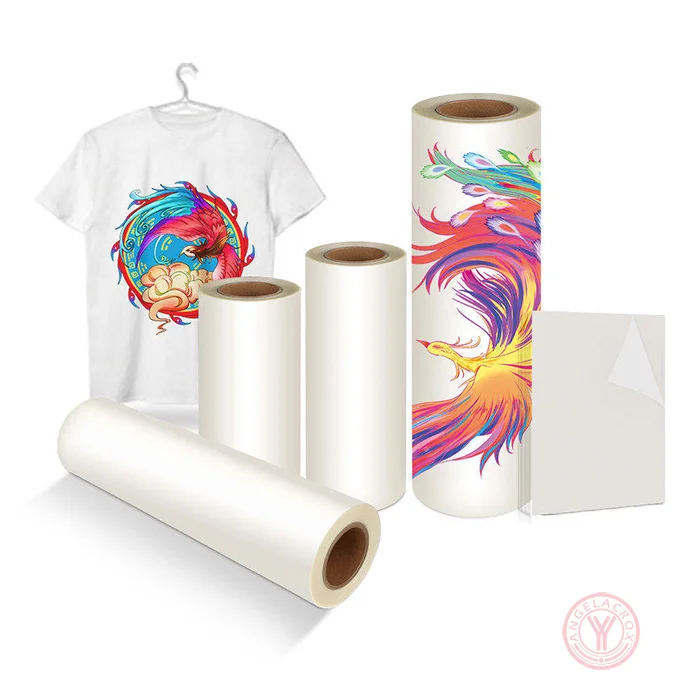
What Is DTF Transfer Film?
DTF transfer film is a specially coated PET film used in Direct-to-Film (DTF) printing, a heat transfer technology that allows printed designs to be transferred onto various fabrics. The film works as a temporary carrier that receives DTF ink, holds hot melt adhesive powder, and releases the finished design onto textiles through heat pressing.
Unlike traditional transfer papers or vinyl materials, DTF transfer film is designed with a functional coating layer that controls ink absorption, powder adhesion, and release performance. A well-made DTF film helps achieve sharp details, bright colors, smooth transfer results, and stable production performance.
As a professional DTF transfer film manufacturer, YanYan specializes in developing and producing heat transfer materials, including DTF PET film, heat transfer vinyl, printable vinyl, and other transfer solutions. With manufacturing experience since 2001, we provide DTF films for distributors, printing businesses, and OEM customers worldwide.
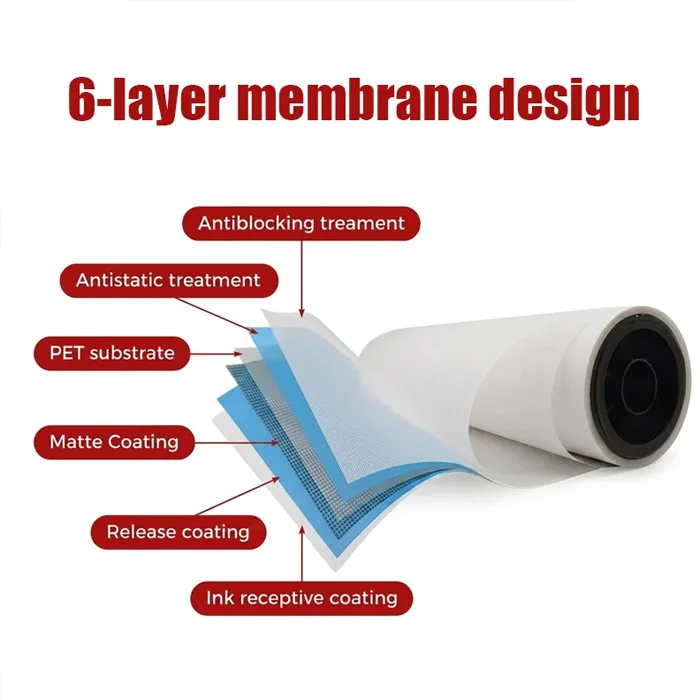
Understanding the Structure of DTF Transfer Film
DTF transfer film is not simply a plastic sheet. It is a multi-layer material designed for the complete DTF printing process.
A typical DTF transfer film consists of:
1. PET Base Film Layer
The PET (Polyethylene Terephthalate) layer provides:
- Dimensional stability
- Heat resistance
- Smooth printing surface
- Mechanical strength during transfer
2. Ink Receiving Coating Layer
The coating layer is one of the most important parts of DTF film.
It helps:
- Control ink absorption
- Prevent excessive ink spreading
- Maintain fine image details
- Support white ink printing
3. Release Layer
During heat transfer, the printed design needs to separate from the film smoothly.
The release layer helps:
- Improve transfer completeness
- Reduce residue
- Support hot peel, warm peel, or cold peel applications
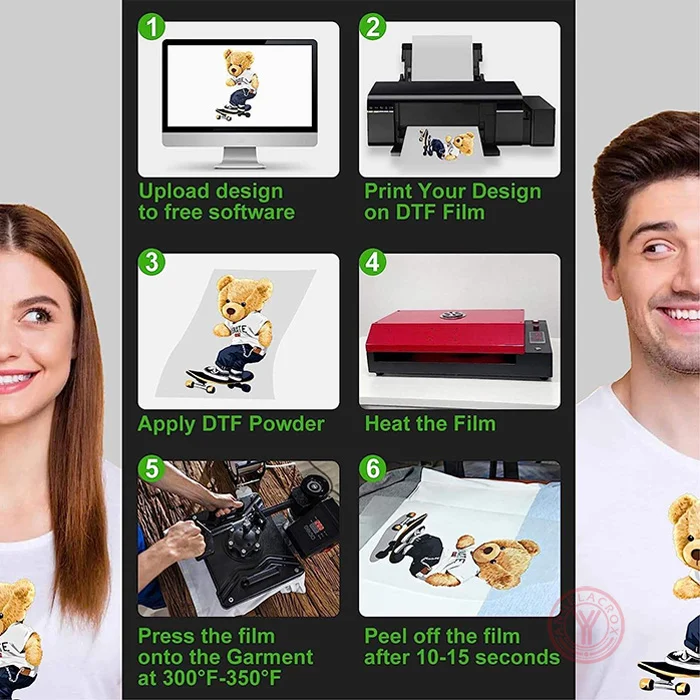
How Does DTF Transfer Film Work?
The DTF printing process includes several important steps:
Step 1: Printing the Design onto DTF Film
A DTF printer prints the design directly onto the coated side of the film.
The printing process usually uses:
- CMYK ink
- White ink
The white ink layer provides opacity, especially for dark-colored garments.
Step 2: Applying Hot Melt Adhesive Powder
After printing, hot melt adhesive powder is applied onto the wet ink.
The powder attaches only to the printed area, creating the adhesive layer required for fabric bonding.
The quality of DTF film coating affects:
- Powder adhesion
- Powder distribution
- Final transfer appearance
Step 3: Powder Curing
The adhesive powder is heated to melt and combine with the printed ink.
Proper curing ensures:
- Strong fabric adhesion
- Smooth surface finish
- Better washing durability
Step 4: Heat Transfer onto Fabric
The prepared film is placed onto the fabric and transferred using a heat press machine.
Typical application factors include:
| Parameter | Common Range |
|---|---|
| Heat Transfer Conditions |
First Transfer: Temperature: 160–165℃ (320°F–329°F); Time: 6–8 seconds Second Transfer: Temperature: 180℃ (356°F); Time: 30 seconds |
| Pressure | Medium pressure |
| Peel Method | Hot / Warm / Cold Peel |
Types of DTF Transfer Film
DTF transfer films come in different types, including hot peel, cold peel, warm peel, single-side coated, double-side coated, and specialty finishes such as matte, glossy, glitter, metallic, reflective, glow-in-the-dark, and pearl. The right film depends on your production speed, fabric type, and the visual effect you want to achieve.
1. By Peel Method
- Hot Peel Film: Can be peeled immediately after pressing, which helps improve production speed and workflow efficiency.
- Cold Peel Film: Requires the film to cool completely before peeling. It is often preferred for controlled release and stable transfer results.
- Warm Peel Film: Peeled after a short cooling period, offering a balance between production speed and transfer control.
- Hybrid / Instant Peel Film: Designed for flexible operation and may support different peeling methods depending on the product specification.
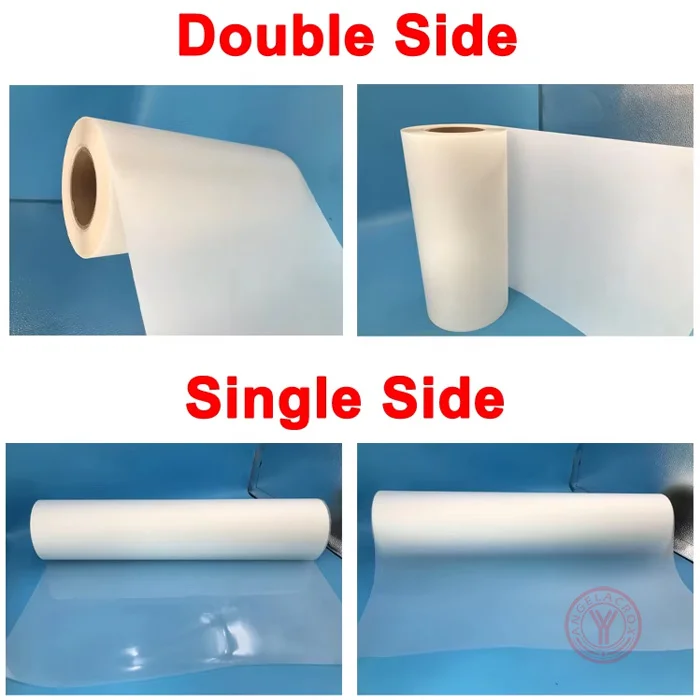
2. By Coating Style
- Single-Side Coated Film: Coated on one side only. It is a common and cost-effective choice for standard DTF printing applications.
- Double-Side Coated Film: Coated on both sides, helping reduce loading mistakes and improving production convenience for certain printing workflows.
3. By Finish
- Matte Film: Provides a softer surface appearance and helps reduce glare during printing and handling.
- Glossy Film: Creates a brighter surface appearance with a smooth visual finish.
- Specialty Films: Available with decorative effects such as metallic, glitter, reflective, glow-in-the-dark, and pearl finishes for premium designs.
4. By Usage Scenario
- Budget / Basic Film: Suitable for general garment production and standard designs where cost control is important.
- High-Vibrancy Film: Designed for applications requiring stronger color output and smoother printing performance.
- Special-Effect Film: Used for premium designs that require unique visual effects, including metallic or reflective appearances.
Simple Selection Guide
If you need faster production, choose hot peel film. If you prefer more control during transfer, cold peel film is a suitable option. For flexible production requirements, hybrid peel film provides more versatility. For premium visual effects, specialty DTF films can create unique design finishes.
DTF Transfer Film vs Other Transfer Materials
DTF Transfer Film vs Sublimation Paper
DTF transfer film and sublimation paper are both used for heat transfer printing, but they work with different printing technologies. The main difference is that DTF transfer film transfers printed designs with adhesive powder, while sublimation paper transfers dye ink directly into polyester fibers through heat.
| Feature | DTF Transfer Film | Sublimation Paper |
|---|---|---|
| Printing Method | DTF printing with ink + hot melt adhesive powder | Sublimation printing with dye ink |
| Transfer Process | Print → Powder → Cure → Heat press | Print → Heat press → Dye absorption |
| White Ink Support | Yes | No |
| Fabric Compatibility | Cotton, polyester, blends, nylon, and more | Mainly polyester fabrics |
| Dark Fabric Printing | Yes | Usually not suitable |
| Design Type | Full-color graphics, photos, detailed patterns | Full-color designs |
| Hand Feel | Soft and flexible transfer layer | Ink becomes part of fabric |
| Best For | Apparel, custom clothing, mixed fabrics | Polyester garments and promotional products |
Learn more about in “What Is the Difference Between DTF and Sublimation?”
DTF Transfer Film vs Heat Transfer Vinyl
DTF transfer film and heat transfer vinyl (HTV) are both popular heat transfer materials used for garment decoration, but they work in different ways. The main difference is that DTF film uses digital printing technology, while HTV uses pre-colored vinyl sheets that are cut and weeded before transfer.
| Feature | DTF Transfer Film | Heat Transfer Vinyl (HTV) |
|---|---|---|
| Printing Method | Digital printing with DTF ink | Cutting vinyl sheets with a plotter |
| Design Type | Full-color images, gradients, detailed graphics | Logos, letters, simple designs |
| Color Capability | Unlimited colors | Limited by vinyl colors |
| Production Process | Print → Powder → Heat transfer | Cut → Weed → Heat transfer |
| Detail Performance | Excellent for fine details and complex patterns | Suitable for simple shapes and text |
| Fabric Compatibility | Cotton, polyester, blends, nylon, and more | Cotton, polyester, blends, and other compatible fabrics |
| Best For | Custom printing, photos, complex artwork | Names, numbers, logos, basic graphics |
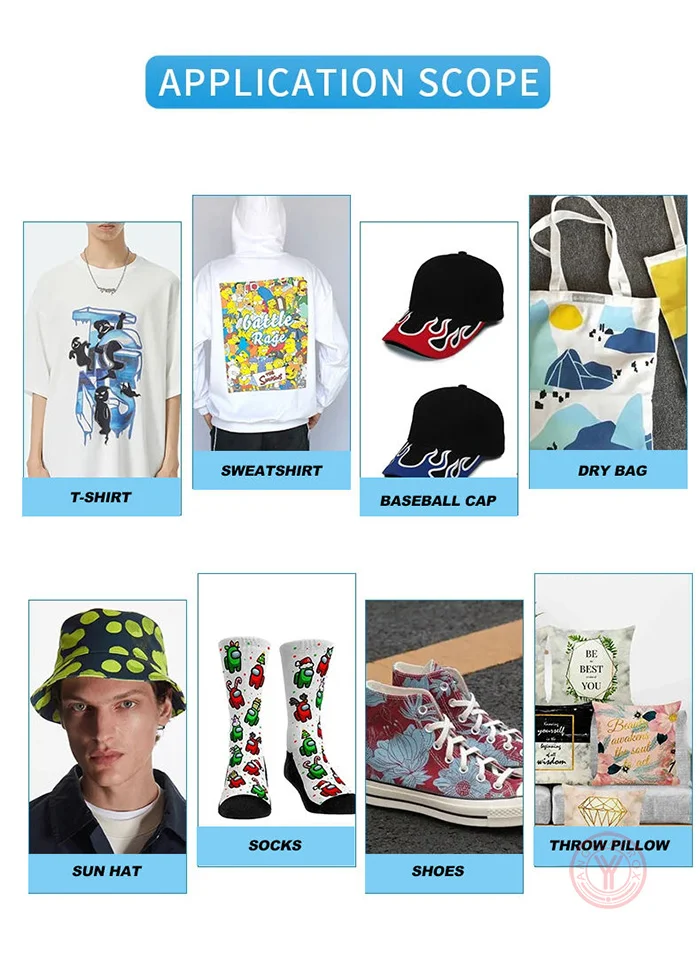
Applications of DTF Transfer Film
DTF transfer film is mainly used for custom apparel, promotional products, sportswear, and even some non-apparel items like bags, wood, and other hard surfaces when the transfer conditions are suitable.
Main applications- Custom apparel: T-shirts, hoodies, jackets, dresses, and other fashion items, especially when you need full-color, detailed designs.
- Sportswear and team uniforms: Logos, player names, and numbers on uniforms and fan gear.
- Promotional products: Tote bags, hats, accessories, and branded merchandise for marketing.
- Event merchandise: Concert, festival, and limited-edition fan apparel.
- Product labels and packaging: Branding elements for bags, wrappers, and presentation materials.
- Non-traditional items: Wood signs, boxes, notebooks, gift bags, pillowcases, and similar items that can handle heat and pressure.
- UV DTF sticker transfers: Used for mugs, phone cases, metal, ceramic, and wood where heat pressing is not practical.
Fabrics of DTF Transfer Film
DTF transfer film is mainly used on cotton, polyester, cotton-poly blends, nylon, leather, canvas, denim, and some other flat surfaces when heat and pressure are suitable.| Fabric Type | DTF Compatibility | Common Applications |
|---|---|---|
| Cotton | ✓ Excellent | T-shirts, hoodies, casual wear |
| Polyester | ✓ Excellent | Sportswear, uniforms |
| Cotton/Polyester Blends | ✓ Excellent | Garments, workwear |
| Nylon | ✓ With testing | Jackets, outdoor products |
| Canvas | ✓ Good | Bags, accessories |
| PU Leather | ✓ With testing | Fashion accessories |
| Spandex/Stretch Fabric | ✓ With suitable settings | Activewear |
How to Choose the Right DTF Transfer Film?
Choose DTF transfer film by focusing on ink absorption, coating consistency, peel type, heat resistance, and storage stability. These are the main factors that determine print sharpness, powder adhesion, transfer smoothness, and overall production reliability.
What to check first
- Ink absorption: The film should hold white and color ink cleanly without bleeding or mixing, because poor absorption causes blurry edges and weak detail.
- Coating quality: Look for an even, consistent coating layer; uneven coating can reduce print uniformity and powder adhesion.
- Powder shaking effect: A good film leaves clean edges after powdering, with minimal leftover powder around the design.
- Release method: Pick hot peel if you want faster workflow, or cold peel if you prioritize a more stable transfer and can wait longer before peeling.
- Heat resistance: The film must withstand the high temperatures used in DTF curing and heat pressing without deforming or losing transfer quality.
- Storage stability: Good film should stay stable after printing and sealed storage, without oil or moisture issues over time.
Matching the film to your job
For everyday production, a standard matte film is usually the safest choice because it balances ink acceptance, transfer quality, and cost. If you print high-volume jobs or detailed designs, a double-sided film may perform better because it can improve ink load and printing consistency. If your business sells premium or decorative products, specialty films can create glitter, metallic, or glow effects, but they usually cost more.
Simple buying rule
A practical way to choose is this: test the film with your own ink, powder, and heat press settings before bulk buying. That matters because the best film is the one that works consistently in your actual production line, not just on paper.
Why Choose YanYan as Your DTF Transfer Film Supplier?
As an experienced heat transfer material manufacturer, YanYan has been specializing in DTF transfer film, heat transfer vinyl, and other transfer solutions since 2001.
We provide:
- Factory-direct supply with stable production capacity
- Custom sizes and OEM solutions for different market requirements
- Flexible MOQ for distributors, businesses, and printing shops
- Quality-controlled production to ensure consistent printing and transfer performance
- Professional support for material selection and application testing
With experience in global heat transfer material supply, YanYan helps customers find reliable DTF film solutions for different printing applications.