
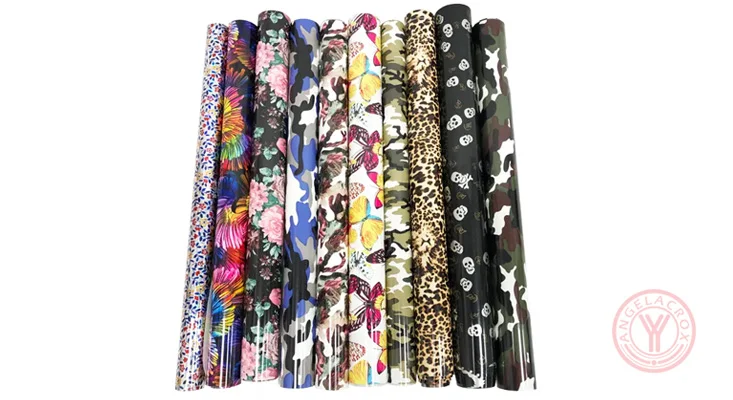
What is a Pattern Heat Transfer Vinyl
Pattern Heat Transfer Vinyl (Pattern HTV) is a specially designed type of iron-on vinyl that comes pre-printed with decorative patterns, textures, or multicolor designs. Unlike standard solid-color HTV, which requires users to layer or combine different colors manually, pattern HTV already features complex visual effects on a single sheet or roll. It lets you easily add multi-colored graphics to fabrics without needing a professional printer. It works with most cutting machines (like Cricut or Silhouette) and applies with a heat press or home iron.Basic Composition of Pattern HTV
Pattern Heat Transfer Vinyl is typically made from high-quality polyurethane (PU) or sometimes TPU-based film. It consists of multiple functional layers:
- Top patterned layer: The printed design (floral, leopard, marble, camouflage, glitter, etc.)
- Adhesive layer (heat-activated glue): Bonds the vinyl to fabric under heat and pressure
- Carrier film (clear PET film): Holds the pattern in place before pressing
- Release liner (depending on type): Protects adhesive during storage and cutting
Key Features of Pattern Heat Transfer Vinyl
- Ready-to-use design:No need for printing or painting. The pattern is already embedded, saving time and production cost.
- Easy application:Works with standard heat press machines or home irons. Just cut → weed → press.
- No mirroring required (important):Unlike standard HTV, most patterned HTV is cut face-up, so there is no need to mirror the design before cutting.
- Strong visual impact:The pre-designed patterns provide a premium and fashionable appearance, especially suitable for boutique clothing brands.
- Wide compatibility:Can be applied to:Cotton,Polyester,Cotton-poly blends,Lycra / Spandex (depending on type)
Popular Types and Patterns Available
One of the most exciting aspects of pattern HTV is the sheer variety of designs on the market. YanYan offer hundreds of patterns and are constantly adding more, whether you're looking for trendy, bold, or classic styles. Common categories include:
- Florals — delicate or bold flower prints, perfect for feminine apparel and accessories
- Camouflage — classic camo patterns popular for outdoor gear and hunting apparel
- Buffalo plaid and geometric prints — timeless checks and shapes for a rustic or modern aesthetic
- Ombre and gradient fades — subtle color transitions that add dimension without layering
- Seasonal and holiday prints — Christmas plaids, Halloween motifs, and other themed designs
- Sports and team colors — school colors and spirited patterns for athletic wear
- Animal prints — leopard, zebra, and other nature-inspired patterns
Applications of Pattern Heat Transfer Vinyl
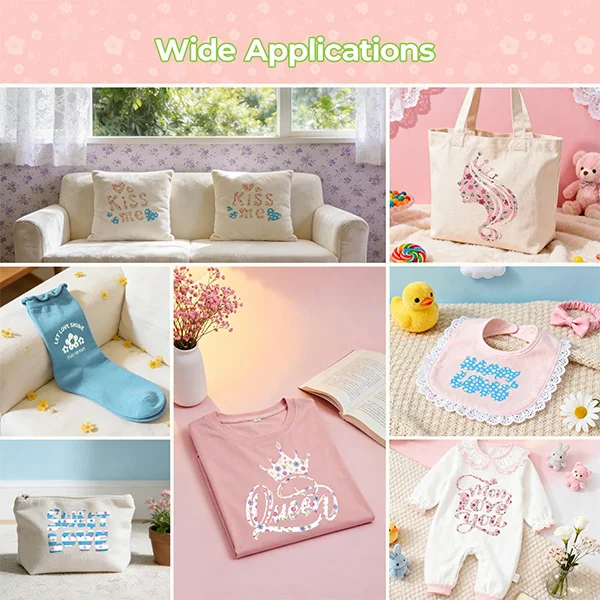
Pattern HTV applications range from custom apparel — such as T-shirts, hoodies, and hats — to accessories like tote bags and shoes, home textiles like pillows and tea towels, and even non-fabric surfaces such as wood signs, glass drinkware, and leather goods, making it a highly versatile material for both personal crafting and small business production.
- T-shirts and casual apparel customization
- Hoodies and sweatshirts design
- Sportswear and team uniforms printing
- Fashion streetwear branding
- Promotional and event merchandise
- Corporate gifts and branded clothing
- DIY personalized clothing projects
- Children’s clothing decoration
- Bags and backpacks customization
- Caps and hats decoration
- Home textile decoration (pillows, cushions)
- Festival and seasonal themed apparel
- Small business custom apparel production
- E-commerce POD (print-on-demand) products
- Handmade craft and creative design projects
How Is Pattern HTV Different from Regular HTV?
Pattern HTV differs from regular HTV in that it comes pre-printed with decorative designs, allowing multi-color effects in a single layer, while regular HTV uses solid colors that require layering or combining to achieve similar visuals.
| Feature | Pattern HTV | Regular HTV |
|---|---|---|
| Appearance | Built-in design (plaid, camo, floral, etc.) | Solid single color |
| Design process | Cut shape only; pattern is already in the vinyl | Must layer multiple colors or use a printer for designs |
| Complexity | Low — one cut, one press | Higher for multi-color designs |
| Mirroring | Usually not required | Always required |
| Weeding | Same process | Same process |
| Color variety | Limited to available patterns | Hundreds of solid colors |
| Customization | Pattern is fixed; shape is customizable | Fully customizable color and shape |
| Cost | Slightly higher per sheet/roll | Generally more affordable |
| Best for | Statement pieces, themed apparel, accents | Logos, text, detailed custom artwork |
| Layering | Can be layered over solid HTV | Easily layered |
| Finish options | Glitter, holographic, matte, glossy | Same options available |
How to Use Patterned Heat Transfer Vinyl
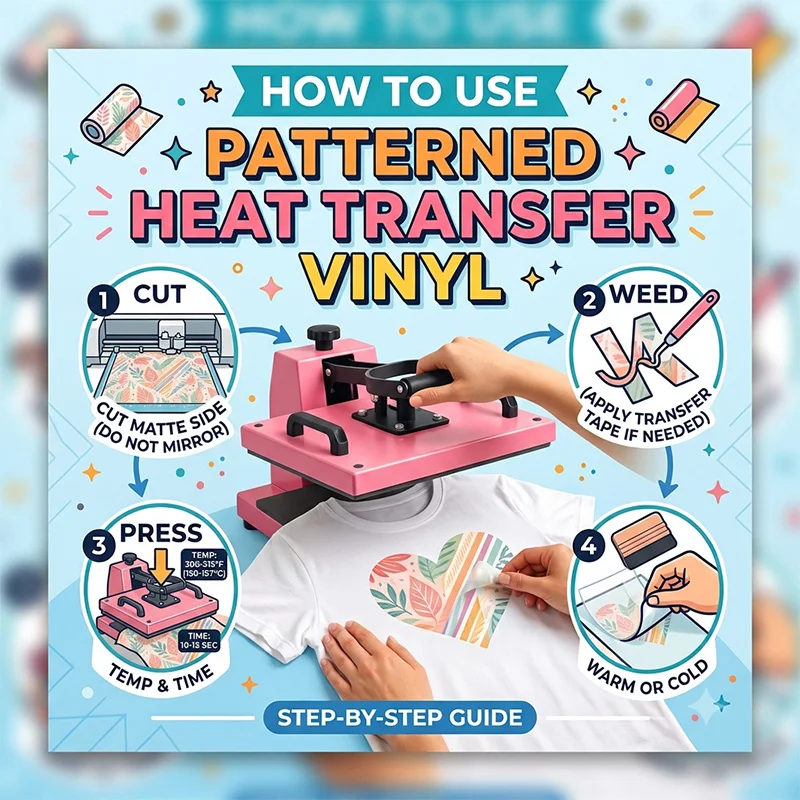
To use patterned heat transfer vinyl, simply place the design face up on your cutting mat, cut it without mirroring, weed away excess material, and position it on your fabric; then apply heat press at around 145–150°C (293–302°F) with medium pressure for 8–10 seconds, and peel according to the product type (cold or warm peel) to reveal a durable, vibrant printed design.
Step-by-Step Application Guide
- Cut: Place patterned HTV on the cutting mat with the pattern side facing up. Do not mirror your image. Use standard HTV cut settings.
- Weed: Remove excess vinyl around your design using a weeding tool.
- Apply Mask (Tape): Apply heat transfer mask, burnish firmly, then lift design from backing.
- Prepress: Preheat fabric for 10–15 seconds to remove moisture and wrinkles.
- Press: Apply at 305°F–315°F (145–150°C) with medium-to-firm pressure for 10–15 seconds.
- Peel: Peel warm or cold depending on manufacturer instructions.
Blade Settings for Pattern Heat Transfer Vinyl
Cricut (Explore Air 2 / Maker)
Use Fine-Point blade, Iron-On material setting, default pressure, speed 8, force 14. A 45° blade is recommended.
Silhouette Cameo 3 / 4
Blade depth 3, speed 8, force 6, Heat Transfer/Flocked setting. Alternative: blade 1, speed 3, force 6 with 2 passes on smooth material.
Tip: Cut force test recommended before production.