
If you're setting up a custom apparel or print-on-demand business, DTF and sublimation are the two heat-transfer methods you'll run into most often — and picking the wrong one for a job can mean a print that cracks, fades, or simply won't show up on the fabric. This guide breaks down exactly what is the difference between DTF and sublimation, how each process works, what materials they support, and which one makes sense for your specific product, budget, and order volume.
The difference between DTF and sublimation comes down to how the ink is applied. DTF (Direct-to-Film) prints a design onto film with a white-ink underbase and adhesive powder, then heat-presses it onto virtually any fabric — cotton, polyester, blends, even dark garments. Sublimation turns solid dye into gas that permanently bonds with polyester fibers or polymer coatings, producing a print with zero texture but only on light-colored, polyester-based materials.
In one line: choose DTF for fabric flexibility and dark garments; choose sublimation for a soft, seamless finish on light polyester items and hard goods like mugs.
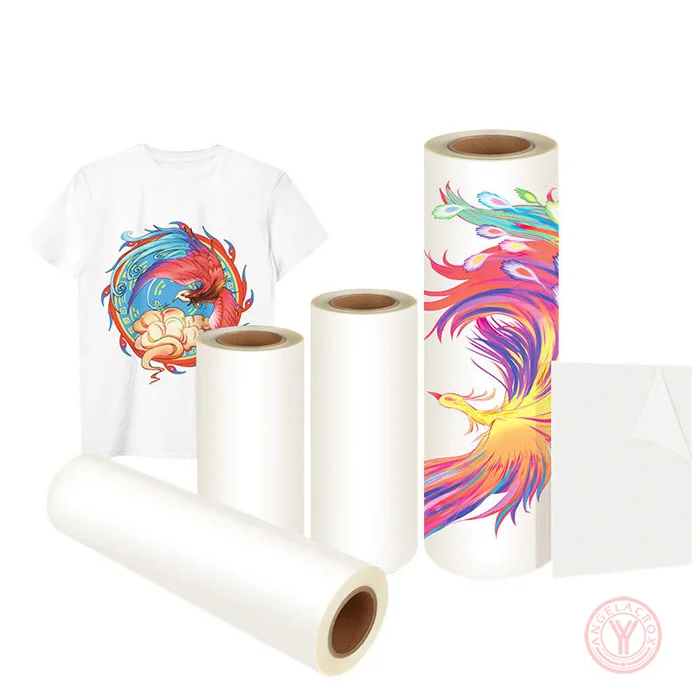
What is DTF printing?
Direct-to-film (DTF) printing prints a full-color design — including a white ink layer — onto a PET film. While the ink is still wet, adhesive powder is applied over the design and the excess is shaken off. The film is then cured with heat to melt the powder into the ink, creating a flexible, sticker-like transfer. A heat press applies that transfer to the garment; once it cools, the film backing peels away and the design stays behind.
Because the white ink layer sits underneath the color layer, DTF prints hold their vibrancy even on black, navy, or heather-gray fabric — something most other printing methods struggle with.
Where DTF is commonly used: custom t-shirt printing on dark cotton, small-batch or one-off apparel orders, mixed-fabric product lines (a shop that prints on cotton, polyester, and blends without switching workflows), and designs that need fine detail with strong color pop.
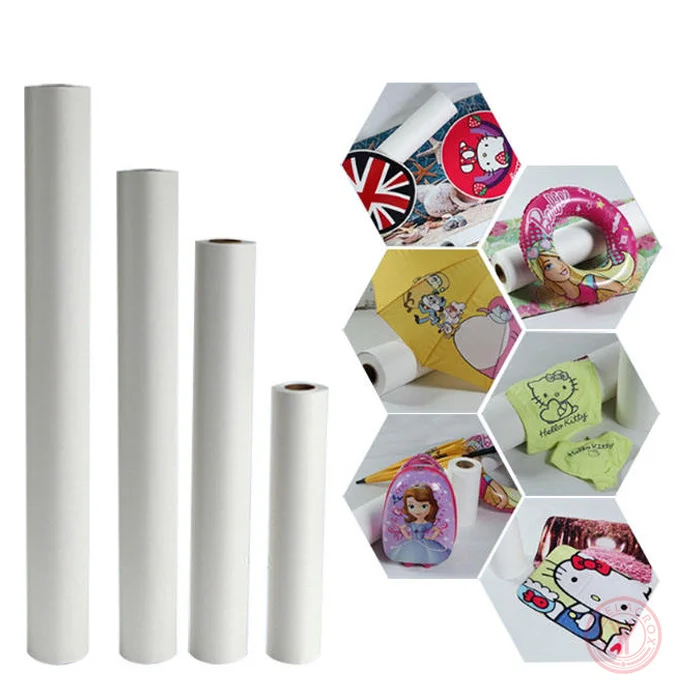
What is sublimation printing?
Sublimation printing works through a physical change of state, not a coating. A design is printed onto sublimation transfer paper using dye-based sublimation ink. When pressed against a polyester substrate at roughly 350–400°F (175–200°C), the solid dye converts directly into a gas — bypassing the liquid phase entirely — and that gas diffuses into the open molecular structure of the polyester fibers. As the material cools, the fibers close back up, permanently trapping the dye inside.
Because the ink becomes part of the material rather than sitting on it, sublimated prints have no texture, don't crack or peel, and are fully breathable.
Where sublimation is commonly used: all-over-print (AOP) polyester apparel, athletic wear, mugs, phone cases, mousepads, metal and ceramic panels, and any light-colored polyester product where a photorealistic, seamless finish matters.
DTF vs sublimation: full comparison table
| Factor | DTF | Sublimation |
|---|---|---|
| Underlying process | Adhesive film transfer with white-ink underbase | Solid-to-gas dye diffusion into fibers |
| Compatible fabrics | Cotton, polyester, blends, nylon, spandex, leather | Polyester and polymer-coated surfaces only |
| Cotton compatible? | Yes | No |
| Dark garment compatible? | Yes, via white ink underbase | No, dye is translucent and needs a light base |
| Hand-feel / texture | Slight raised layer on the fabric surface | None, dye is embedded in the fibers |
| Breathability | Slightly reduced under the printed area | Fully breathable |
| Print coverage | Best for individual graphics, logos, standard placements | Can cover the entire garment, seam to seam |
| Typical durability | Rated for 50+ washes; can crack with heavy stretching or high heat over time | Lasts as long as the garment fabric itself; no cracking or peeling |
| Startup equipment cost | Higher — printer, white/CMYK ink, powder shaker, curing unit, heat press | Lower to moderate — printer, sublimation ink, heat press |
| Consumables | Film, adhesive powder, ink | Transfer paper, ink |
| Best cost profile | Small batches, mixed fabrics, one-off orders | Large runs on the same polyester substrate |
| Environmental footprint | More waste from film and powder, largely non-biodegradable | Comparatively lower waste |
| Typical use case | Dark cotton t-shirts, hoodies, small-batch apparel | Light polyester apparel, mugs, hard goods, all-over prints |
Which fabrics work with each method?
DTF fabric compatibility is broad by design: 100% cotton, cotton-poly blends, polyester, nylon, spandex, and even treated leather can all take a DTF transfer, because the adhesive layer bonds to the surface of the fabric rather than needing to react chemically with it.
Sublimation fabric compatibility is narrow by design: the process needs polyester (or a polymer coating) to bond with at a molecular level. As a rule of thumb, fabric should be at least 65% polyester for colors to look vibrant — below that threshold, or on 100% cotton, the dye has nothing to bond to and will wash out or never transfer at all. This is the most common long-tail question in this space, so to be direct: you cannot sublimate on 100% cotton.
DTF vs sublimation for dark shirts and hoodies
If the product is a black, navy, or otherwise dark-colored garment, DTF is the practical (and often only) choice. Sublimation ink is translucent — it relies on a white or light base fabric to show true color, so on a dark shirt the design will appear faded, muddy, or invisible. DTF solves this with a white ink layer printed underneath the color layer, which is why it has become the default method for custom printing on dark cotton apparel like hoodies, black tees, and dark team uniforms.
Cost comparison: which is cheaper to start and to run?
Startup cost tends to favor sublimation. A basic sublimation setup needs a printer, sublimation ink, transfer paper, and a heat press. A DTF setup needs all of that plus a dedicated powder shaker/curing unit and both white and CMYK ink, which raises the initial investment.
Cost per unit depends on your order pattern, not just the method:
- For small, mixed-fabric, or one-off orders, DTF is often more cost-effective in practice, because there's no need to hold different equipment or inventory for different fabric types.
- For large runs on a single polyester product (like a batch of mugs or matching polyester jerseys), sublimation is usually cheaper per unit, since its consumables are simpler and it has fewer processing steps.
A simple framework to compare the two for your own numbers:
DTF cost per unit ≈ (film + ink + adhesive powder + curing/press time) ÷ prints per film sheet
Sublimation cost per unit ≈ (transfer paper + ink + press time) ÷ prints per sheet
Because exact pricing varies by region, printer brand, and ink cost, run this formula with your own supplier quotes rather than relying on a single fixed number from any article — including this one.
Durability: which one lasts longer?
Sublimation prints generally last longer in absolute terms, because the dye becomes part of the fabric rather than a layer on top of it — there's nothing to crack, peel, or wear away. A well-executed sublimation print can realistically outlast the garment itself.
DTF prints are still highly durable when properly cured and pressed — commercial-grade DTF transfers are typically rated for 50 or more wash cycles — but because the design sits slightly above the fabric surface, repeated stretching, high-heat ironing directly on the print, or harsh washing can eventually cause micro-cracking. Using a low heat setting and turning the garment inside out before washing meaningfully extends DTF print life.
Can a sublimation printer be used for DTF?
No, not out of the box. This is a frequent point of confusion, so it's worth being precise: sublimation printers are built around dye-sublimation ink and are optimized to work with sublimation transfer paper. DTF requires pigment-based DTF ink (including a dedicated white ink channel) and a powder-curing step that a stock sublimation printer isn't equipped to handle. Some specialty converted or hybrid printers exist, but a standard sublimation printer cannot produce DTF transfers without modification.
DTF vs sublimation for specific products
- T-shirts and hoodies (dark colors): DTF — sublimation can't show up properly on dark fabric.
- T-shirts (light polyester or poly-blend): Either works; sublimation gives a softer feel, DTF gives more flexibility if you also print on cotton items.
- Mugs, tumblers, phone cases: Sublimation — these are typically polymer-coated hard goods designed specifically for the sublimation process.
- All-over print leggings or jerseys: Sublimation — its ability to print edge-to-edge on polyester makes it the standard for full-garment designs.
- Mixed product line (shirts + bags + hats in various fabrics): DTF — one workflow covers nearly every substrate.
- Baby clothes or sensitive-skin apparel: Sublimation, when the fabric is polyester, due to its zero-texture finish.
Which should a beginner or small business choose?
For a hobbyist or first-time print shop, sublimation is often the easier entry point: fewer consumables, a shorter learning curve, and lower maintenance. For a small business planning to serve a wide range of customer requests — especially custom apparel on dark cotton, which is a large share of the custom t-shirt market — DTF's fabric versatility usually justifies the higher upfront cost. Many established print shops eventually run both methods side by side, using DTF for apparel and sublimation for hard goods and light polyester items.
Common mistakes to avoid with each method
DTF mistakes:
- Skipping or under-curing the adhesive powder step, which leads to poor adhesion and early cracking
- Ironing or pressing directly on top of a finished DTF print at high heat
- Using low-quality PET film that doesn't release cleanly, distorting the design
Sublimation mistakes:
- Attempting to sublimate on cotton or low-polyester blends, which will not hold the dye
- Using the wrong time/temperature/pressure combination for the specific substrate, causing dull or uneven color ("ghosting")
- Not using butcher paper or a protective sheet during pressing, which can cause dye migration onto the heat press
Frequently asked questions
What is the difference between DTF and sublimation?
DTF prints a design onto film and heat-presses it as a layer on top of the fabric, working on almost any material including dark cotton. Sublimation turns dye into gas that bonds inside polyester fibers, working only on light-colored polyester or polymer-coated items.
Is DTF or sublimation better for t-shirts?
For cotton or dark-colored shirts, DTF is the practical choice. For light-colored polyester shirts, sublimation gives a softer, longer-lasting result.
Can you sublimate on cotton?
No. Sublimation requires polyester or a polymer coating to bond with; on 100% cotton, the dye has nothing to fuse to and will wash out.
Does DTF wash off?
Not if it's properly cured and pressed. Quality DTF transfers are typically rated for 50+ washes, though the surface layer can crack over very long-term, heavy use if not cared for.
Which is cheaper, DTF or sublimation?
Sublimation usually has a lower startup cost and a lower cost per unit for large runs on the same polyester product. DTF is often more cost-effective for small or mixed-fabric orders, since it avoids needing separate equipment per fabric type.
Which lasts longer, DTF or sublimation?
Sublimation typically lasts longer in absolute terms because the dye is embedded in the fabric rather than sitting on top of it, so there's no surface layer to crack or peel.
Can a sublimation printer do DTF transfers?
Not without modification. Standard sublimation printers use different ink and lack the white-ink channel and powder-curing process DTF requires.
What size can DTF and sublimation print?
This varies by machine, but sublimation printers commonly support larger print platens suited to all-over designs, while DTF printers are typically sized for standard front/back placements — check your specific printer's specs, as this varies by model and manufacturer.
How this guide was put together
This guide reflects standard, widely used practice in direct-to-film and dye-sublimation garment printing as of mid-2026, cross-checked across multiple industry sources including print-on-demand platforms, printing equipment manufacturers, and specialty transfer suppliers. Costs, wash counts, and equipment specifications vary by brand, region, and machine model — where a number depends heavily on your specific setup (like per-unit cost or maximum print size), this guide gives you the framework to calculate it yourself rather than a single figure that may not apply to your equipment. If you're making a purchasing decision, we recommend confirming current pricing and specs directly with your equipment or ink supplier before buying.
Looking for high-quality DTF Film? Explore YanYan’s DTF Film solutions for professional printing applications.
Explore DTF Film →